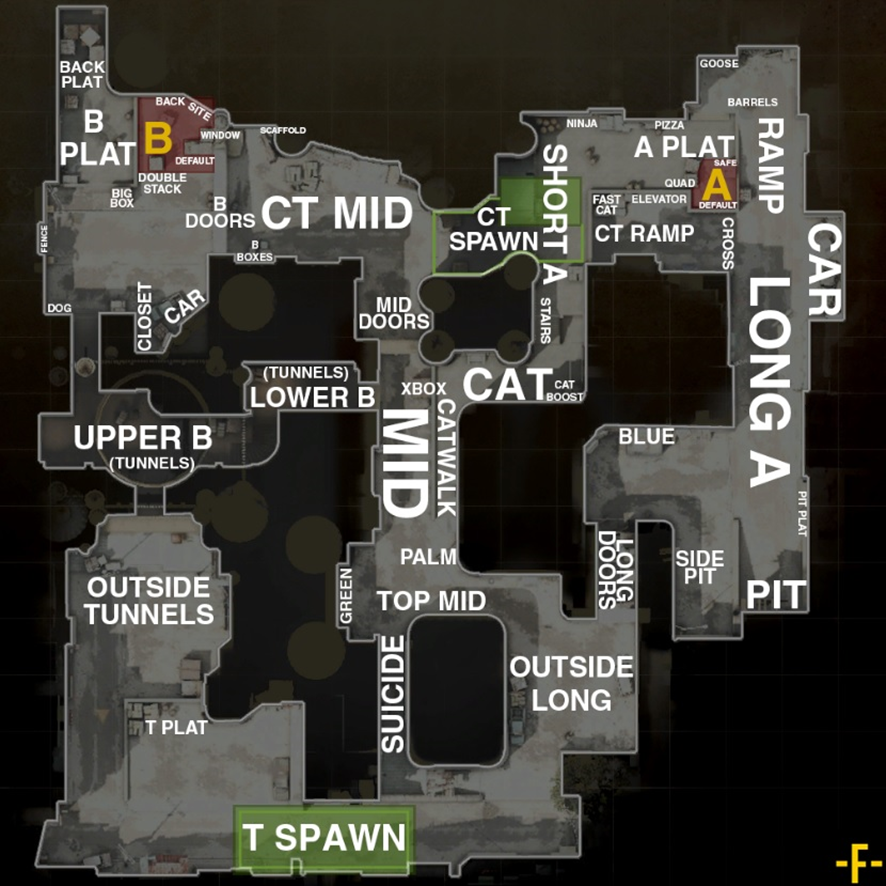
Mastering Callouts: The Key to Team Success in CS2
In the fast-paced world of Counter-Strike 2 (CS2), effective communication is critical for team success. Mastering callouts, or the specific terms used to describe map locations and strategies, can make the difference between victory and defeat. Players who are proficient in callouts are able to provide clear and concise information to their teammates, ensuring everyone is on the same page. This not only minimizes confusion but also enhances tactical planning. To truly excel, teams should develop a standardized list of callouts that every member understands, allowing for quick and effective responses during intense gameplay.
Moreover, the art of callouts extends beyond mere terminology; it involves strategic collaboration and situational awareness. For instance, during a critical round, a well-timed callout can inform teammates of enemy positions or suggest alternative strategies. When constructing your callout system, consider incorporating visual aids or using gaming tools that help players visualize map layouts. By practicing these callouts in scrims or casual matches, teams can refine their communication skills, leading to improved coordination in real matches. Ultimately, mastering callouts can significantly boost your team's performance, making it an indispensable skill in CS2.
Counter-Strike is a popular first-person shooter game that pits teams against each other in various objective-based missions. For players looking to improve their gameplay, utilizing optimal cs2 pro settings can make a significant difference in performance and tactics.
Top 10 Essential Callouts Every CS2 Player Should Know
As a Counter-Strike 2 (CS2) player, understanding the key mechanics and strategies can significantly enhance your gameplay experience. This guide presents the Top 10 Essential Callouts that every CS2 player should know. Callouts not only facilitate better communication among teammates but also improve your game awareness, allowing you to anticipate enemy movements and defend against attacks more effectively. Here’s a list of the essential callouts:
- Bomb Site A – Often referred to as 'A Site', this is a crucial area for planting bombs and defending against the opposing team.
- Bomb Site B – Similarly known as 'B Site', it's vital for players to communicate about enemy positions when defending or attacking.
- Mid – This central area enables players to navigate the map quickly; controlling Mid is key for map dominance.
- Long – A strategic position on maps like Dust 2 that offers a clear line of sight and is frequently contested.
- Short – The opposite of Long on certain maps, this area provides a different angle for surprise attacks.
- Connector – A narrow passage allowing movement between different areas, this is critical for surprise tactics.
- Heaven – An elevated position often used for sniping or covering teammates.
- Hell – A low position that can be utilized for sneaky maneuvers.
- Garage – Found in some maps, this area can serve as cover or a flank route.
- Back Site – Referring to the area behind bomb sites, where players can hide and ambush attackers.
Mastering these callouts can dramatically improve your teamwork and communication in-game, giving you an edge over your opponents. Remember, clarity is key; always be specific when making callouts to avoid confusion and ensure your team can respond effectively. Practice these callouts with your friends or in casual play to sharpen your skills and prepare for competitive matches!
How Strategic Callouts Can Transform Your CS2 Gameplay
Strategic callouts play a crucial role in enhancing your CS2 gameplay by improving team communication and collaboration. Clear and concise communication can make the difference between victory and defeat. Use callouts to provide your teammates with essential information about enemy locations, strategies, and potential threats. For instance, identifying crucial spots on the map with specific names can streamline your team's response to enemy movements. As a player, ensure you're familiar with common callouts for each map and consistently use them to keep your team aligned during intense firefights.
Moreover, implementing strategic callouts can lead to a more organized and tactical approach in your gameplay. Consider creating a system where you utilize numbered or outlined lists for enemy positions. For example, callout numbers can help convey information quickly, such as:
- 1: Enemy spotted at B site.
- 2: Sniper located at the tower.
- 3: One enemy flanking from the left.
By integrating these tactics, you’ll not only enhance your own performance but also elevate your entire team’s effectiveness, ultimately transforming your CS2 experience into one marked by precision and teamwork.